

Ghana’s next chapter in cashew may depend on what happens after the harvest and on the women building businesses around it.
The cashew nut is small. The opportunity around it is not.
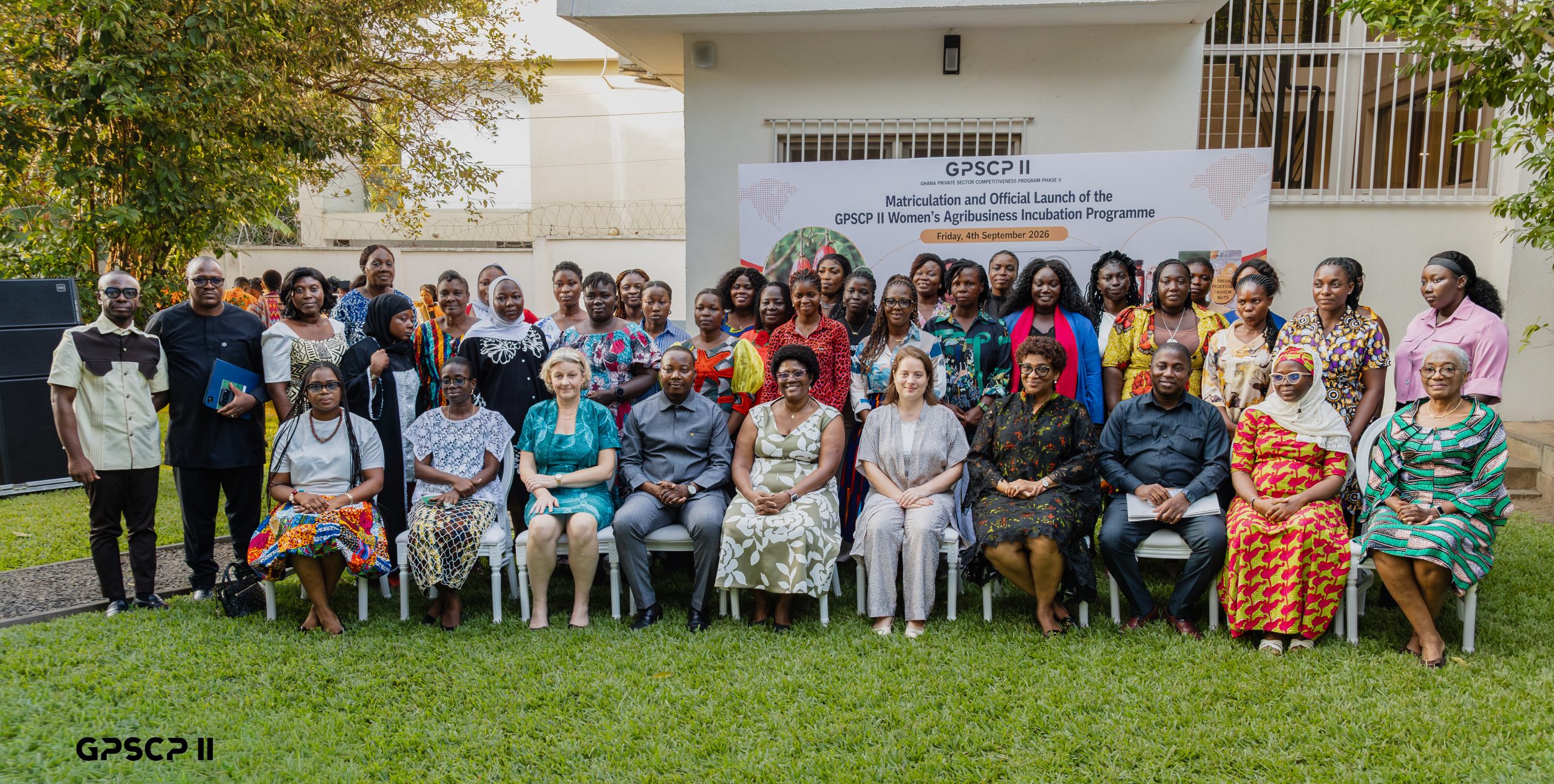
On a warm afternoon in Accra, 32 women entrepreneurs gathered in the gardens of the Swiss Government’s Economic Cooperation and Development office. They came from businesses at different stages of growth, but with a common ambition: to move beyond selling raw cashew and begin capturing more of the value created from it.
Some are looking towards processing. Others want to build brands, enter new markets or strengthen businesses that have reached the point where growth requires more than determination alone.
What brought them together was the launch of the Women’s Agribusiness Incubation Programme, an initiative designed to help women-led businesses build the capabilities needed to move further up Ghana’s cashew value chain.
The proposition is simple. Ghana produces cashew. The bigger opportunity is to do more with it.
That means processing. Packaging. Branding. Market access. Finance. And the less visible work of building businesses that can compete and grow.
The Opportunity Beyond the Harvest
For years, conversations about agricultural transformation in Ghana have focused heavily on production: how much farmers produce, how productivity can be improved and how commodities can reach markets.
But there is another question. What happens after the commodity leaves the farm?
In cashew, that question carries particular weight. A raw nut can be traded as a commodity, but it can also become a processed food, a packaged product, a consumer brand or the foundation of a larger enterprise. Every step along that journey can create additional economic value.
For the women entering the incubation programme, however, moving along that chain will require more than a good product and an ambition to grow. It requires technical knowledge, business systems, market intelligence, mentorship and access to appropriate finance. That is where the programme comes in.
Through technical assistance, capacity development, mentorship and market access support, the initiative is designed to help 32 women-led businesses strengthen the foundations of their enterprises and explore opportunities for growth.
At the official launch, Pearl Esua-Mensah, Executive Director of the Ghana Climate Innovation Center (GCIC),distilled the challenge into four short instructions:
“Be bold. Be resilient. Be ethical. Show up and do the work.”
The words capture something fundamental about entrepreneurship. Support can open doors, but it cannot walk through them for a business owner.
The programme can provide training, connections, mentorship and access to markets. The entrepreneurs must turn those opportunities into stronger businesses. And that is where the question of finance becomes more complicated.
Ask many small-business owners what they need to grow, and the answer is often straightforward: money.
But capital does not automatically create a successful business. Without sound financial records, a clear business model, reliable markets and the capacity to manage growth, additional financing can solve one problem while exposing another. The Women’s Agribusiness Incubation Programme therefore places considerable emphasis on finance readiness.
First National Bank Ghana and RDF Ghana are working alongside the participating businesses to help them understand what the financing market requires and what it takes to present a credible case for investment.
The goal is not to promise that every business will secure financing.
It is to help entrepreneurs understand what investors and financial institutions look for—and to determine whether debt, equity or blended finance is appropriate for their particular stage and business model.
At the launch, Juliana Ofori-Karikari, Team Leader of the Ghana Private Sector Competitiveness Program II (GPSCP II), put the principle plainly:
“Many entrepreneurs say they need money to grow their businesses. But capital only works when you have the capacity to use it well. This programme is an investment in that capacity.”
That distinction is important. The question is not simply where an entrepreneur can find money. It is whether the business is ready to use that money productively and whether it has the systems, strategy and market opportunity to turn capital into sustainable growth.
Not every business will qualify for finance. But every business can become better prepared to understand the financing market and engage with it more confidently.
The gathering in Accra also reflected the wider network required to make such an ambition possible.
Representatives of the Embassy of Switzerland in Ghana, Benin and Togo and SECO Economic Cooperation and Development, including Janine Walz, Deputy Head of Cooperation, reaffirmed Switzerland’s commitment to jobs, skills and sustainable economic development.
Government representatives from the Ministry of Youth Development and Empowerment and the Office of the Minister of State for Climate Change and Sustainability also participated, underscoring the importance of building value chains that can create employment while supporting sustainable and climate-smart growth.
Their presence pointed to a broader reality: agricultural transformation rarely happens through one institution or one intervention. Entrepreneurs need markets. Markets need competitive businesses. Businesses need skills and finance. And all of them operate within an environment shaped by policy, institutions and investment. The cashew story, in other words, is not simply about the nut. It is about the ecosystem around it.
The programme’s ambition extends beyond the 32 businesses in the first cohort. A dedicated employability track will support 100 National Service Scheme personnel, helping create a pipeline of young talent for Ghana’s evolving agribusiness sector. That is significant because value-chain transformation requires people at every stage.
People who understand production and processing. People who can build brands and reach consumers. People who understand finance, sustainability, technology and markets. The entrepreneurs in the programme are building businesses today. The young people entering the employability track may help build the businesses and institutions of tomorrow.
Together, they represent two sides of the same challenge: creating the businesses and the talent required for a more competitive agricultural economy.
The 32 businesses gathered in Accra are not simply participants in another entrepreneurship programme. They are part of an experiment in what Ghana’s cashew economy could look like when more of the value created around the commodity is captured locally.
The future of Ghana’s cashew sector will not be measured only by how many tonnes the country produces. It will also be measured by what happens to those tonnes afterwards. For the women gathered in Accra, that journey has now begun.
The cashew nut may be small. But the ambition surrounding it is anything but.
The Women’s Agribusiness Incubation Programme is funded by the Swiss Government through the Swiss State Secretariat for Economic Affairs (SECO) and jointly implemented by the Ghana Private Sector Competitiveness Program II (GPSCP II) and Ashesi University’s Ghana Climate Innovation Center (GCIC).
Leave a Reply
You must be logged in to post a comment.